what are you looking for?
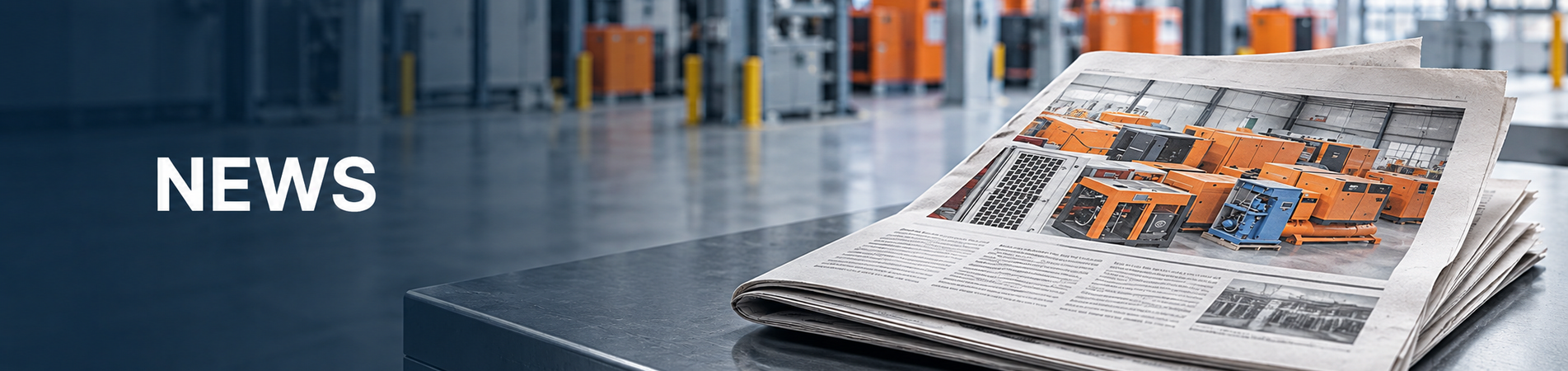
In the sophisticated aerospace industry, every technology and every piece of equipment bears on flight safety and project success or failure. Air compressors, though seemingly basic, are core power equipment that runs through the entire lifecycle of R&D, manufacturing, operation and maintenance, and launch. Boasting the characteristics of cleanliness, high pressure, stability and reliability, they lay a solid foundation for the efficient operation of the aerospace industry and have become an indispensable key piece of equipment.
In the aerospace manufacturing segment, air compressors are a powerful assistant for precision assembly and process forming. The assembly of core components such as aircraft fuselages and wings is inseparable from professional pneumatic tools like pneumatic riveters and pneumatic drills. The stable air supply provided by air compressors ensures precise torque and high operational efficiency of these pneumatic tools, meeting the high-strength and high-precision assembly requirements of aerospace components. For aerospace-specific materials such as carbon fiber composite materials, the autoclave curing process relies on high-pressure and clean compressed air for pressure forming to eliminate oil contamination and foreign matter pollution, ensuring composite components are free of delamination and defects and complying with the stringent quality standards of the aerospace industry. In addition, processes such as sandblasting strengthening of fuselage surfaces, precision painting, and fine grinding of parts also require dry and oil-free compressed air to guarantee the quality of surface treatment and enhance the durability and aesthetics of components.
In the field of aero-engine R&D and testing, air compressors play an irreplaceable role. As the heart of an aircraft, the bench test of an aero-engine needs to simulate the high-altitude air intake environment. Air compressors can provide high-pressure air supply to complete a number of testing tasks such as engine purging, cooling and sealing, accurately reproducing the actual high-altitude working conditions and providing data support for engine performance debugging and reliability verification. At the same time, the air tightness testing and clean purging of core components such as engine turbines, pipelines and fuel systems also rely on oil-free and dry compressed air to prevent oil residue from affecting engine operation and fully ensure that engine performance meets the standards.
In airport ground support and aircraft operation and maintenance scenarios, air compressors are the key to ensuring the normal operation of flights and the airworthiness of aircraft. Aircraft engine starting units (ASUs) rely on high-pressure air compressors for air supply, which can quickly start aircraft engines to replace auxiliary power units, effectively saving fuel and reducing operation and maintenance costs. The pressure testing and leak detection of aircraft landing gear, flight control systems and brake systems, as well as the driving of various maintenance pneumatic tools in hangars, all depend on stable compressed air. Even routine service work such as high-pressure inflation of aircraft tires and ventilation and purging of fuel tanks is fully supported by air compressors, guarding the takeoff, landing and flight safety of aircraft.
In the field of space launch and spacecraft testing, the performance of air compressors directly determines the success or failure of launch missions. The operation of the gantry tower of rocket launch pads, the driving of fuel refueling systems and the operation of fire sprinkler systems all require power from high-pressure air compressors. The thermal vacuum testing, attitude control testing and propulsion system testing of satellites and spaceships also need high-purity and high-pressure air supply to ensure their normal operation. Compared with ordinary industrial air compressors, aerospace-specific air compressors have extremely high technical standards for cleanliness, pressure resistance and stability, which need to reach Class 0 oil-free level, adapt to extreme working conditions and meet the stringent zero-failure requirements of space launches.
Compared with conventional industrial applications, aerospace air compressors adhere to ultimate technical standards: oil-free cleanliness to prevent contamination of precision components, high pressure and stability to adapt to various special working conditions, as well as resistance to high and low temperatures, vibration resistance and long service life, all in line with the safety and quality norms of the aerospace industry. From civil aircraft manufacturing to military aviation operation and maintenance, from satellite R&D to rocket launch, air compressors have always supported the aerospace industry in breaking technical barriers and achieving high-quality development with their stable and reliable power output, becoming an important cornerstone for advancing the aerospace industry.



 IPv6 network supported
 English
 français
 Deutsch
 русский
 español
 português
 日本語
日本語 한국의
한국의 ไทย
ไทย 中文
中文